Tinkers' Construct 3 Armor
Tinkers’ Construct 3 natively provides armor, though it works a bit different from how Traveller’s Gear worked in Tinkers’ Construct 1, or how the addon worked in Tinkers’ Construct 2. This page gives an overview of the major mechanics to help you make your best armor.
Core Mechanics
Armor in Tinkers’ can either be used to boost your defense, or provide many powerful utilties that boost either offense or non-combat abilities. This is accomplished through armor stats and through different modifier types.
Armor Stats
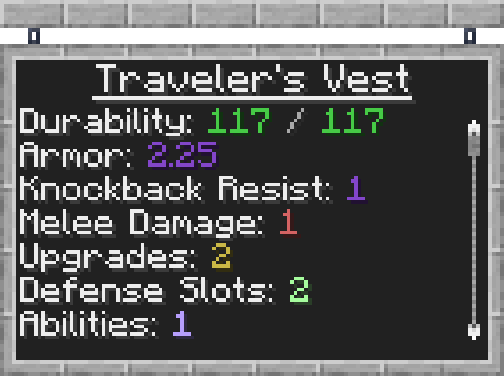
Armor has a few notable stats:
- Armor determines the standard defense provided by the armor. The most defensive armor typically reaches at most 16 points in armor, though you can use the diamond modifier to reach the full 20.
- Toughness is used to prevent high damage attacks from piercing your defense.
- Knockback Resistance causes you to take less knockback from attacks.
- Durability determines how long until the armor breaks. Armor typically takes damage when you are attacked, though some modifiers take additional durabiliy for their effect. Once broken, it will no longer provide most of its effects.
Upgrades

Upgrades are a type of modifier can be used on armor to grant utility abilities such as reinforced (reducing durability loss) or speedy on pants (boosting movement speed). Their combat usage is typically limited to offsense such as knockback on chestplates, or counterattack modifiers such as thorns.
There are many ways to get more upgrade slots on armor, including several methods that can be applied to any armor piece without using modifier slots.
Defense Modifiers

Defense modifiers provide the tool with more defensive ability, mirroring how protection enchantments work on vanilla armor. There is no option for general protection here, but you can mix any number of conditional protection types to get all around defense if desired. Additionally, most defense modifiers provide a secondary effect that scales with the largest level of that modifier.
There are 5 core types of defense modifiers: melee protection, projectile protection, fire protection, blast protection, and magic protection. Additionally, defense slots can be filled with non-standard protection like revitalized to boost your number of hearts.
Defense slots tend to be limited on tools, though you can get 1 additional slot through rebalanaced. Additionally, most armor pieces can get an additional defense slot using armor trim.
Abilities

Ability slots can be filled with powerful modifiers that drastically change the tool’s behavior. These are primarily utility such as double jump or bouncy on boots, but also has some defensive options like general protection and some offense options like strength on chestplates.
Ability slots are more limited than defense slots, with all armor that starts with ability slots having reduced defense. All armor can receive additional defense slots using rebalanced or late game from draconic.
Plate Armor
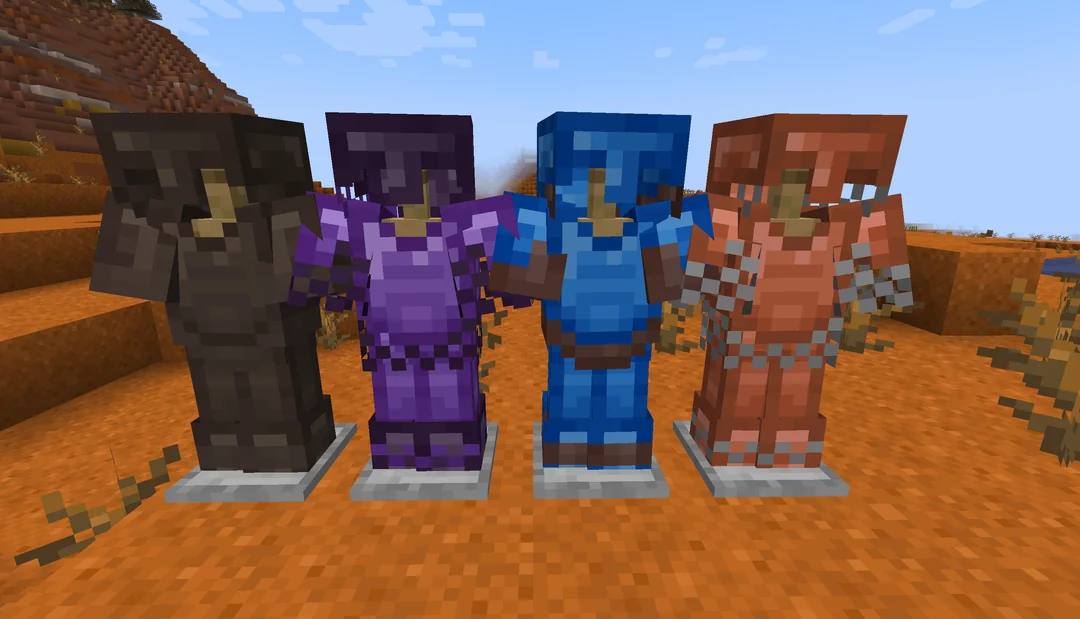
Plate armor is the standard defensive armor option. It is crafted in the tinker station or anvil using armor plating, which must be casted, along with armor maille which can be casted or made in the part builder from leather.
Plate receives large defensive stats from the armor plating, and starts with 3 defense slots, 2 upgrade slotz, and no ability slots. Additionally both the armor plating and armor maille provide traits comparable to a defense slot.
Plate armor additionally has a shield, created by casting molten metal onto a shield core tool part. This shield is comparable to the standard shield, blocking most damage but leaving you drastically slowed while blocking.
Traveler’s Gear
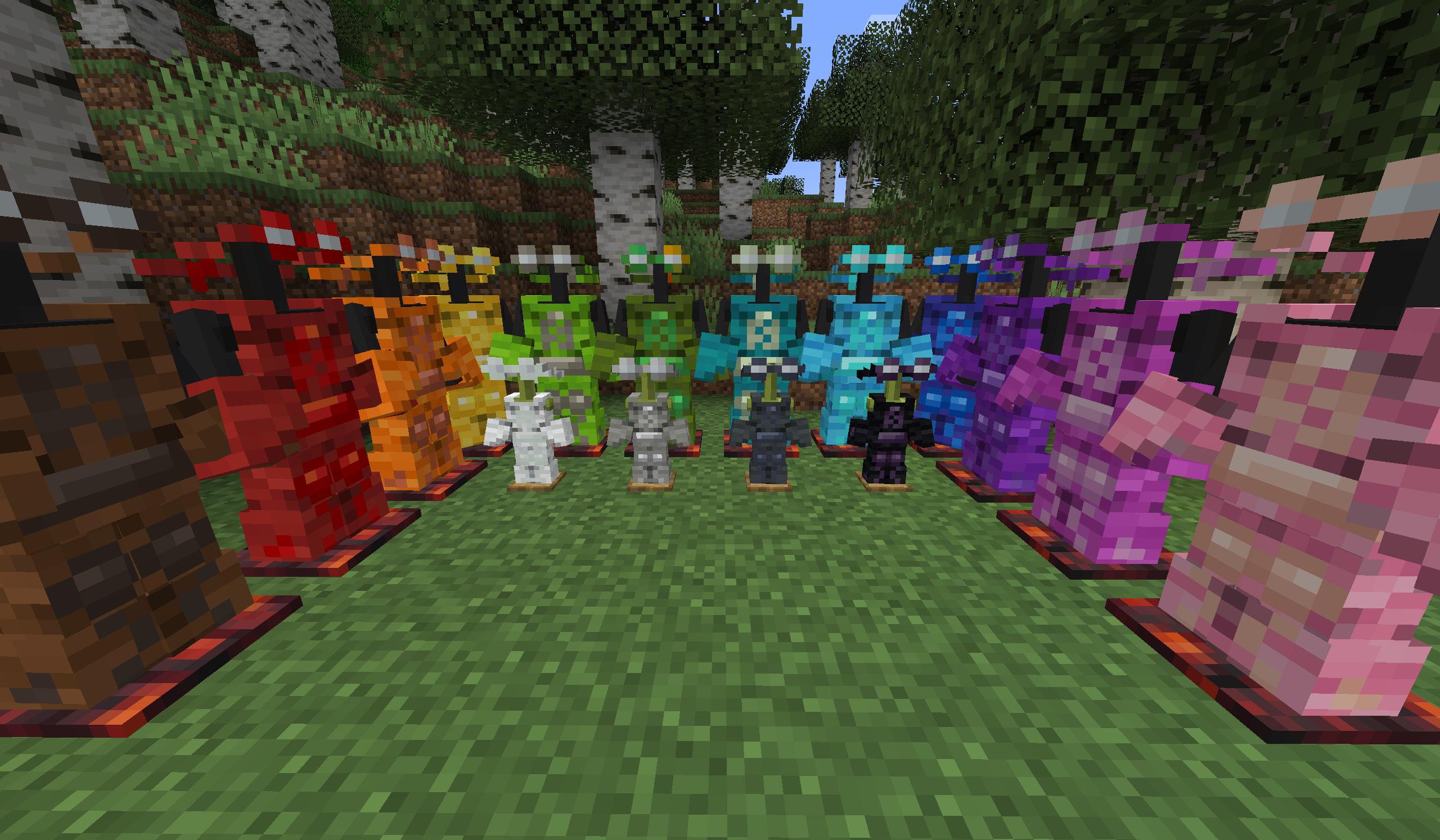
Traveler’s gear is a hybrid armor set, granting less defense than plate armor but more space for utility modifiers. It is crafted in the crafting table or station using a plating material (largely metal ingots) and a cuirass material (largely leather, wool, or vines), making it a bit easier to craft than plate.
Traveler’s receives reduced defensive stats from the plating compared to plate armor, but makes up for it by starting with 1 ability slots, 2 defense slots, and 1 upgrade slot. Additionally, the plating provides a trait comparable to a defense slot, while the cuirass provides a utility trait. Finally, travelers gear is like leather armor, making you immune to the effects of powder snow.
Traveler’s gear additionally has a shield made in the part builder using a cuirass material with a wood or bone shield core material. The shield provides less defense than plate shields, but allows migh higher movement speed while blocking.
Slimesuit
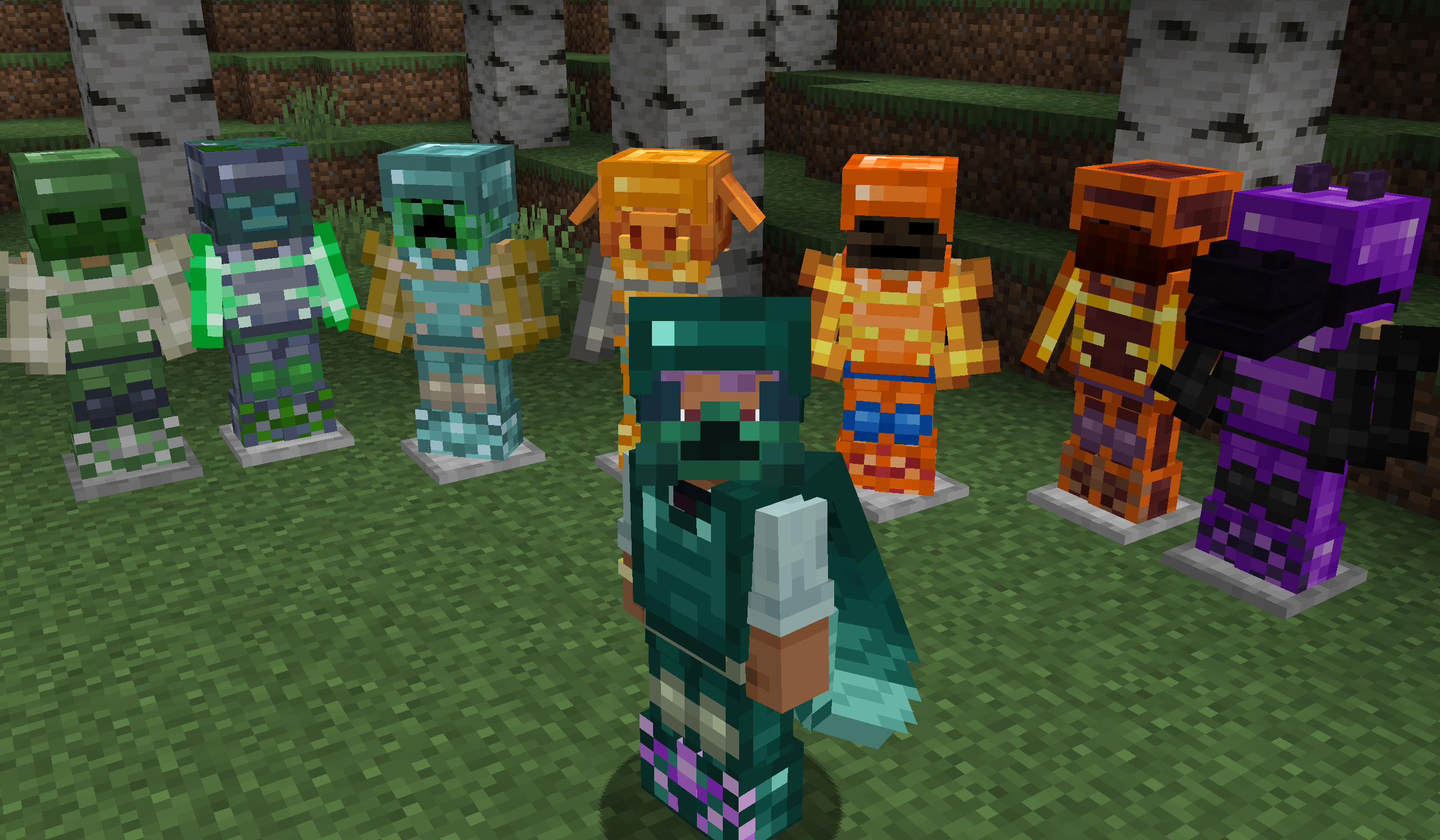
The slimesuit is a utility armor set, grating very little defense but many powerful modifiers for mobility, exploration, and offense. Mob parts are combined to create tool parts in the part builder, then slime is casted on the parts in a casting basin.
All slimesuit pieces have no defense outside the material traits. They make up for it by starting with 2 ability slots, 3 upgrade slots, and no defense slots. Additionally, they have powerful utility or alternative defense traits from the slime, and each part of the slimesuit has unique traits that are boosted by armor trim (instead of granting a defense slot):
- Slimeskulls are the helmet, made from mob skulls. The skull traits provide many powerful effects as strong as an ability slot.
- Slimecages are the chestplate, made from bones or rod ribcages. The ribcage traits boost your damage for in unarmed combat, while all slimecages boost reach.
- Slimeshells are the pants, made from shells, shards, or scales. The shell traits grant utility effects that mirror secondary effects from defense modifiers. Additionally, all slimeshells start with a small inventory.
- Slimeboots are the footwear, made from string or vine laces. The lace traits grant utility effects more comparable to upgrades, but all slimeboots also allow you to bounce on landing.
- Slimelytras are an alternative chestplate, made from an elytra. They grant the special wings ability, and start with 1 less ability slot and 1 more upgrade slot than other pieces in the set.
The slimesuit does not have a standard shield, though slime staffs take a similar role. They start with 2 ability slots which can be filled with many useful tool abilities.
More to Explore
There is a ton more to explore in Tinkers’ Construct. For a full guide on the mod, check out the in game books, which are also available online. It is also recommended to install Just Enough Items to make it easier to look up recipes in game.
Additionally, the Twilight Forest since 1.21.1 has their own take on the classic Traveller’s Gear from Tinkers’ Construct 1 if you wish to see how the original design might have looked on modern Minecraft.